
Published on

About Us
Lorem ipsum dolor sit amet, consectetur elit, sed do eiusmod tempor incididunt ut labore et magna aliqua.
Get a free quote
Research Meets Practice: A Serious Effort to Build Health Collaboration in Papua
Jimianus Karlodi – Tuesday, 14 October 2025
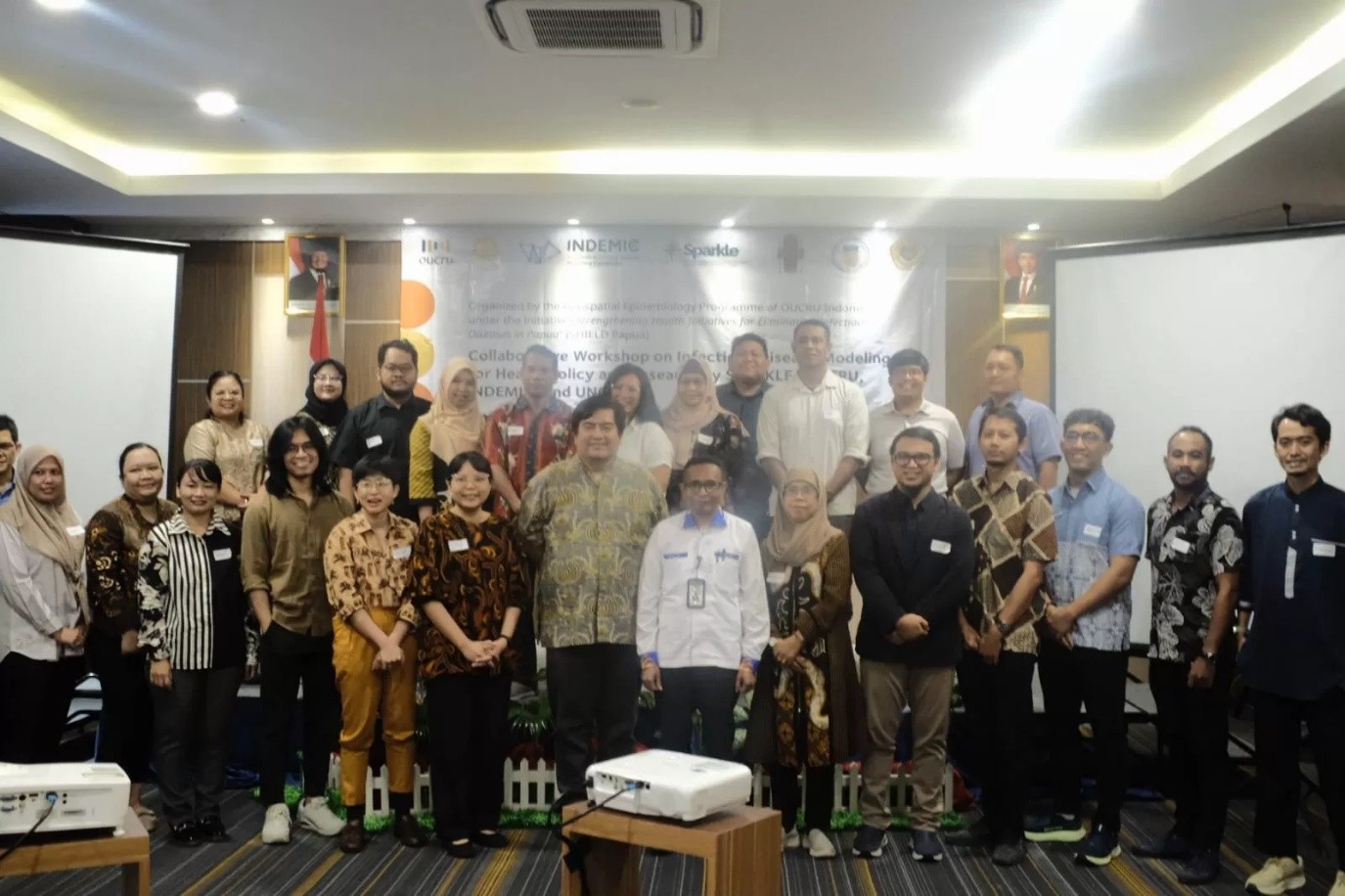
CEPOSONLINE.COM, JAYAPURA — To enhance knowledge on infectious diseases in Papua, a total of 45 researchers and health practitioners from local and international institutions took part in a four‑day workshop held from Monday to Thursday (13–16 October 2025) at Horison Sentani Hotel, Jayapura Regency.
The workshop, titled “Infectious Disease Modeling for Research and Health Policy,” was funded by SPARKLE (Strengthening Preparedness in the Asia-Pacific Region through Knowledge, Learning and Education).
This activity is part of the Strengthening Health Initiatives for Eliminating Infectious Diseases in Papua (SHIELD PAPUA) program, which focuses on strengthening scientific capacity to support the elimination of infectious diseases in Papua. The program is implemented through collaboration with local and international institutions, including Universitas Cenderawasih (UNCEN), the Oxford University Clinical Research Unit Indonesia (OUCRU ID), and the Indonesia Infectious Disease Modelling Community (INDEMIC).
SPARKLE is an international consortium based at the Peter Doherty Institute for Infection and Immunity, University of Melbourne, Australia, established to enhance knowledge and education in health preparedness.
Participants and speakers came from UNCEN, the Papua Provincial Health Office, the Papua Public Health Laboratory, OUCRU ID, the National University of Singapore, Monash University Indonesia, the National Research and Innovation Agency (BRIN), UNICEF, WHO, and the Dengue Coalition (KOBAR).
UNCEN served as the host of the workshop through its faculties of health sciences, mathematics, and natural sciences.
“UNCEN is committed to becoming a center for scientific development that is relevant to community needs. Initiatives such as this strengthen UNCEN’s role in building local capacity and ensuring active contributions to research and decision‑making at both national and global levels,” said Dr. Dirk Y. P. Runtuboy, Vice Rector for Academic Affairs at UNCEN, on Monday (13/10/2025).
At the same venue, Prof. Hasmi, a senior lecturer at the Faculty of Public Health, UNCEN, emphasized that the workshop would have a direct impact on research capacity in Papua.
“Papua is unique and complex. Its vast territory, limited infrastructure, and extreme ecological diversity result in infectious disease patterns-such as malaria, tuberculosis, HIV/AIDS, and dengue-that differ from other regions in Indonesia,” he explained.
Meanwhile, Dr. Iqbal Elyazar, Chair of the SHIELD PAPUA Initiative and Head of the Geospatial Epidemiology Program at OUCRU Indonesia, stated that mathematical modeling serves as a tool to help researchers and policymakers understand how infectious diseases spread, predict the impact of interventions, and determine the most effective strategies before implementation.
“Through modeling, we can better understand transmission patterns and optimize health interventions in accordance with the Papuan context,” he said. He added that collaborative efforts among research institutions, universities, and local governments are expected to grow, with Papua envisioned as a new center of excellence for infectious disease modeling research in Indonesia.
A complementary perspective was shared by Dr. Bimandra Djaafara, Lead Facilitator from INDEMIC and a researcher at the National University of Singapore, who highlighted the workshop’s strategic value for strengthening scientific capacity in Papua.
“This workshop marks the beginning of building an infectious disease modeling research network in Papua. Researchers can collaborate across disciplines to address health challenges in the region. Partnerships between researchers and policymakers must be strengthened. Modeling should not stop at academic publications, but also be applied in planning and evaluation,” he explained.
Assoc. Prof. Henry Surendra, PhD, researcher and Head of the Master of Public Health Program at Monash University Indonesia, emphasized that the event was not merely a technical training, but a long‑term investment in science in Papua.
“Papua needs a generation of scientists and policy analysts who can speak the same language—the language of data, models, and scientific evidence,” he concluded. (*)
Tags:

Tags: