
Published on

About Us
Lorem ipsum dolor sit amet, consectetur elit, sed do eiusmod tempor incididunt ut labore et magna aliqua.
Get a free quote
Malaria PERDHAKI and OUCRU Indonesia Strengthen Digitalisation of Malaria Vector Control through Kadet Vektor
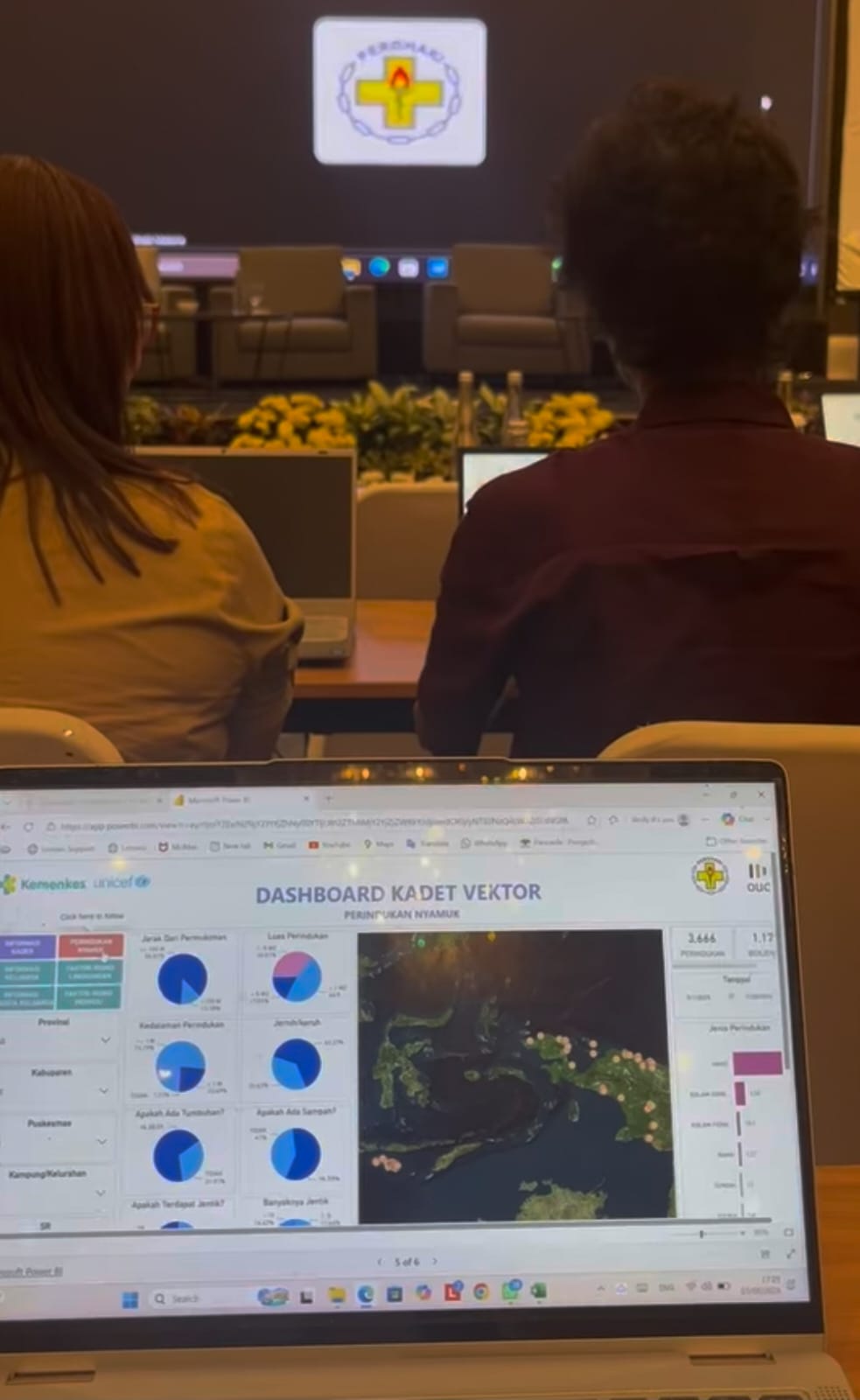

Malaria PERDHAKI and OUCRU Indonesia are continuing to strengthen the use of digital technology to support the monitoring and reporting of malaria vector control activities at community level. This effort is being advanced through the development and implementation of Kadet Vektor, a digital application designed to help malaria cadres systematically record, monitor, and report vector control activities.
Strengthening the use of Kadet Vektor was one of the key focuses of the Programme Monitoring and Evaluation Meeting, Quill Refresher Training, and Kadet Vektor Meeting, jointly organised by Malaria PERDHAKI and the Ministry of Health of the Republic of Indonesia from 3–5 August 2026 at Hotel Santika Premiere Gubeng, Surabaya. The meeting provided an opportunity for programme managers to evaluate the use of the application, identify challenges encountered in the field, and share experiences in using digital systems to support malaria control efforts.
Kadet Vektor was developed through a collaboration between Malaria PERDHAKI and OUCRU Indonesia as part of efforts to strengthen digital-based recording and reporting systems. As of August 2026, the application has been implemented in 77 community health centres (Puskesmas) across six provinces: Papua, West Papua, Central Papua, South Papua, Southwest Papua, and East Nusa Tenggara.
Through the application, malaria cadres’ activities at community level can be documented in a more structured manner. The data collected supports the monitoring of vector control activities and helps programme managers identify areas and aspects that require further strengthening.
The Surabaya meeting was attended by 48 participants, comprising Programme Managers from SRs and SSRs, as well as Monitoring and Evaluation staff from SRs. The involvement of programme managers is important to ensure that the application is not only understood from a technical perspective, but is also integrated into programme mentoring, supervision, monitoring, and management mechanisms across different areas.
The evaluation highlighted several challenges in the use of digital technology at community level. Cadres’ levels of proficiency in using the application remain uneven. Limited internet connectivity and access to devices, together with various technical issues, can also affect the consistency and completeness of data entry.
For OUCRU Indonesia, these findings provide important input for the further development and refinement of Kadet Vektor. Digital health technology development does not end with creating an application; it must also ensure that the system is appropriate to cadres’ working contexts and can be used effectively under diverse field conditions. User experiences and feedback are therefore essential for understanding operational needs and determining areas for improvement.
The meeting also highlighted positive progress in several areas. SSR PERDHAKI KAME recorded a high level of cadre engagement, while SSR PW Keuskupan Weetebula recorded a 26 per cent increase in data entry in May 2026. The experiences of these two areas provide valuable lessons for strengthening the use of the application in other regions.
Collaboration among civil society organisations, malaria programme managers, community health cadres, and research institutions is essential to ensure that digital innovation responds to real-world needs. Through joint monitoring, evaluation, and learning, Kadet Vektor is expected not only to digitalise record-keeping, but also to strengthen information systems and support evidence-informed decision-making for malaria control.
OUCRU Indonesia will continue to support the development of data- and evidence-based approaches to strengthen malaria control programmes in Indonesia. The experience of implementing Kadet Vektor across different settings also provides important lessons on the need to adapt digital technologies to local geographical conditions, cadre capacity, and programme needs at community level.
Through continued collaboration between Malaria PERDHAKI and OUCRU Indonesia, further strengthening of Kadet Vektor is expected to support more effective, measurable, and responsive vector control activities, while contributing to Indonesia’s efforts to achieve malaria elimination by 2030.

Photo Source: PERDHAKI Documentation Team
Tags:
Tags: