
Published on

About Us
Lorem ipsum dolor sit amet, consectetur elit, sed do eiusmod tempor incididunt ut labore et magna aliqua.
Get a free quote
MoH Malaria TWG Field Oversight Visit to Mimika Regency: Strengthening Strategic Partnerships for Malaria Elimination
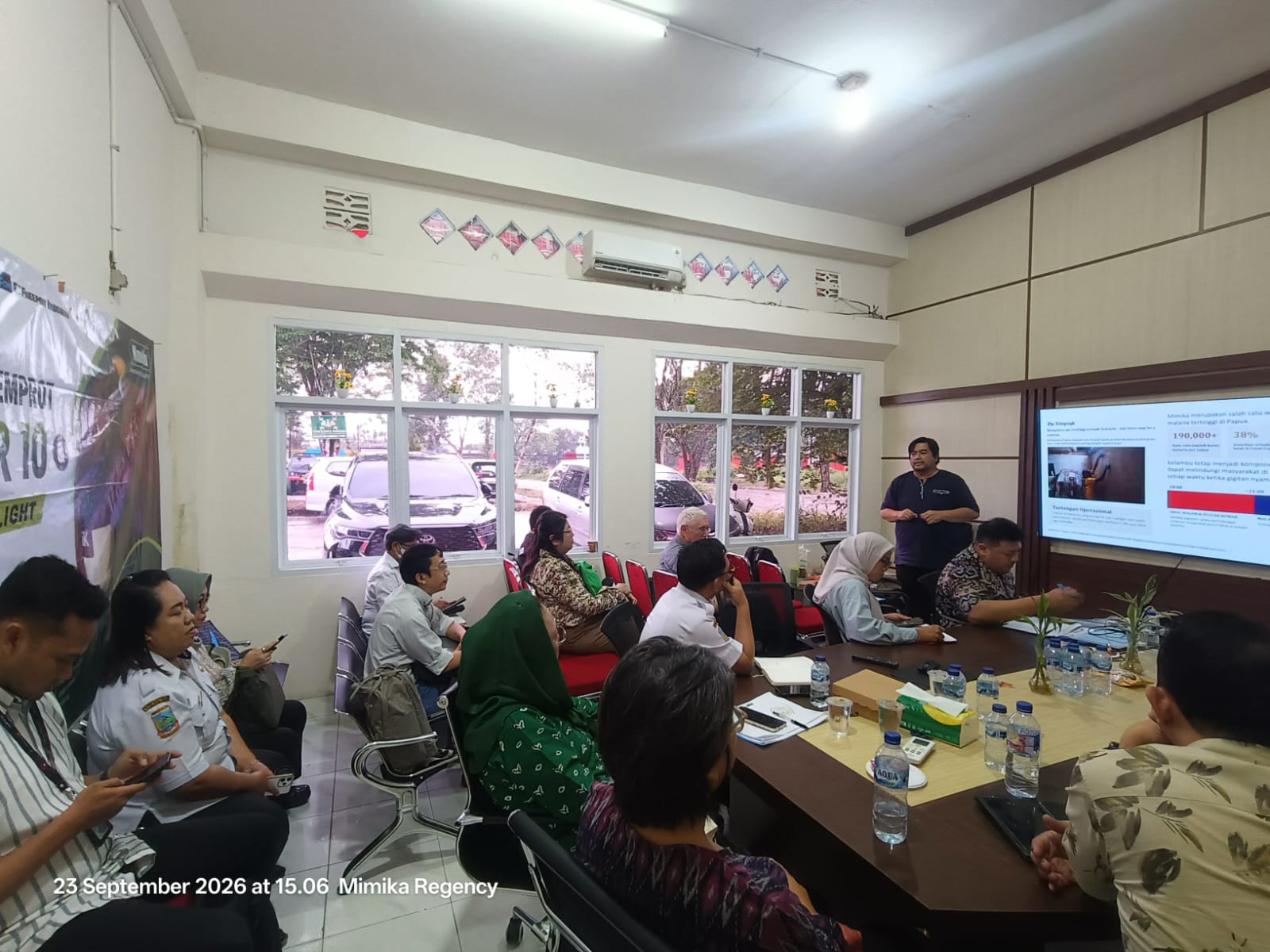
Timika, Central Papua — The Malaria Technical Working Group (TWG) of the Country Coordinating Mechanism (CCM) Indonesia, alongside the Ministry of Health of the Republic of Indonesia, conducted a Field Oversight Visit (FOV) to Mimika Regency, Central Papua, on 21–25 September 2026. This visit aimed to review malaria elimination indicator progress, evaluate the implementation of The Global Fund (TGF) Grant Cycle 7, and foster coordination among government bodies, local stakeholders, and research partners.
Representing SHIELD PAPUA and OUCRU Indonesia, Dr. Iqbal Elyazar participated actively as an expert member of the Malaria TWG. The involvement of SHIELD PAPUA underscores the ongoing commitment of researchers to guide evidence-based policies and innovative solutions in high-endemic settings.
The visit commenced with a multi-stakeholder coordination meeting hosted at the Bappeda Office and the Mimika District Health Office. Attendees included representatives from the Central Papua Provincial Health Office, SR/SSR Perdhaki, the Mimika Malaria Center, PT Freeport Indonesia, UNICEF, WHO, and local civil society organizations. The oversight delegation assessed local malaria program performance, focusing on Early Detection and Prompt Treatment (EDAT/TOKEN) implementation, supply chain management via SMILE at the District Health Logistics Store (IFK), and primary health service delivery at Pasar Sentral and Wania Health Centers.
Beyond reviewing primary health care services, the TWG delegation visited the Mimika Malaria Center. The team received progress updates on ongoing feasibility and efficacy studies evaluating spatial emanators (utilizing volatile transfluthrin) as a novel vector control tool being piloted in Mimika Regency. The delegation also visited intervention households to observe community uptake and the practical application of spatial repellents firsthand.
By bringing together key policymakers, local authorities, and research networks such as SHIELD PAPUA, this oversight visit provided critical insights into field-level operational challenges. The findings and recommendations will inform action plans to accelerate progress toward sustainable malaria elimination across Mimika Regency and the broader Papua region.
Tags:
Tags: