
Published on

About Us
Lorem ipsum dolor sit amet, consectetur elit, sed do eiusmod tempor incididunt ut labore et magna aliqua.
Get a free quote
SHIELD PAPUA Supports Heat Vulnerability Index Integration in Extreme Heat Preparedness Training at Jakarta City Hall
Jakarta is facing a growing public health emergency driven by extreme heat due to the Urban Heat Island (UHI) and densely populated low-income communities with limited access to cooling. At the same time, the health system's response capacity continues to face significant challenges. Many healthcare workers have not received formal training to recognize heat-related illnesses, manage their clinical manifestations, or effectively communicate public health messages to the community.
To strengthen health resilience against the impacts of climate change, particularly extreme heat, the Jakarta Heat Resilience and Health Initiative was established as a cross-sectoral collaboration to build the capacity of the Provincial Government of DKI Jakarta in identifying, monitoring, and responding to extreme heat events through integrated technical approaches and institutional coordination. The initiative brings together the Regional Development Planning Agency (Bappeda), the Health Office, the Environmental Office, the Indonesian Agency for Meteorology, Climatology and Geophysics (BMKG), and other key stakeholders, including Samudra Sains Teknologi as the implementing partner for the C40 Cities Climate Leadership Program.
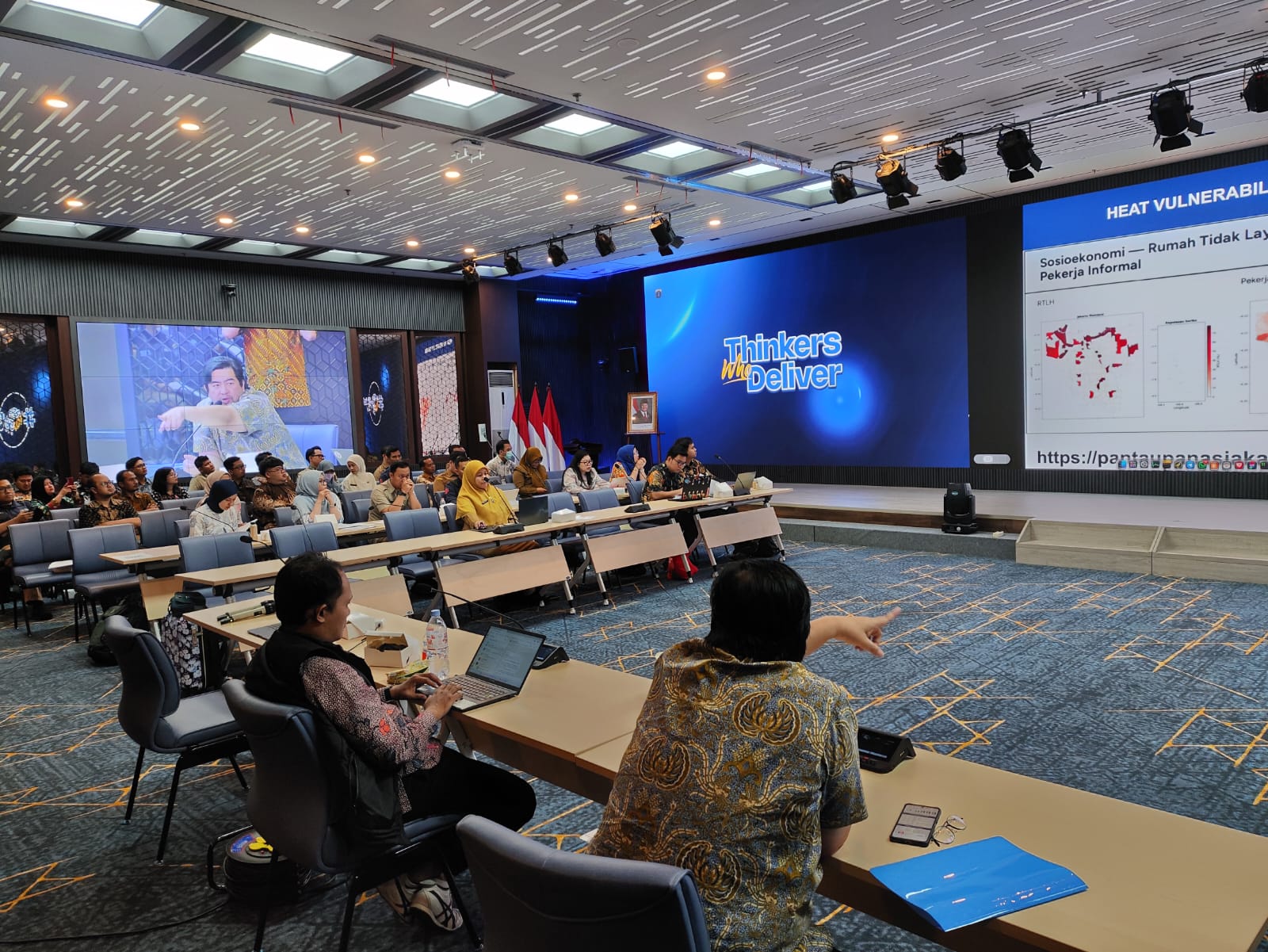
As part of this initiative, a Healthcare Worker Training Program was held on 29–30 June at Jakarta City Hall, bringing together 100 healthcare professionals from hospitals and primary healthcare centers across Jakarta.

During the training, Dr. Iqbal Elyazar delivered a presentation on populations vulnerable to the impacts of extreme heat, the scientific evidence on heat-related health impacts, and the development of the Heat Vulnerability Index for Jakarta.
The training was designed to bridge the gap between the initiative's technical infrastructure and the capacity of the healthcare workforce. The training covered the application of the Heat Vulnerability Index, the Heat Risk Early Warning System, strengthening protocols for data recording and interagency communication, and enhancing community engagement through health education and reinforced public health messages delivered via community workshops.
Download the presentation materials via the following link:
Tags:
Tags: