
Published on

About Us
Lorem ipsum dolor sit amet, consectetur elit, sed do eiusmod tempor incididunt ut labore et magna aliqua.
Get a free quote
OPERA Timika Field Workshop and Pilot Implementation for Vector Control Strategies
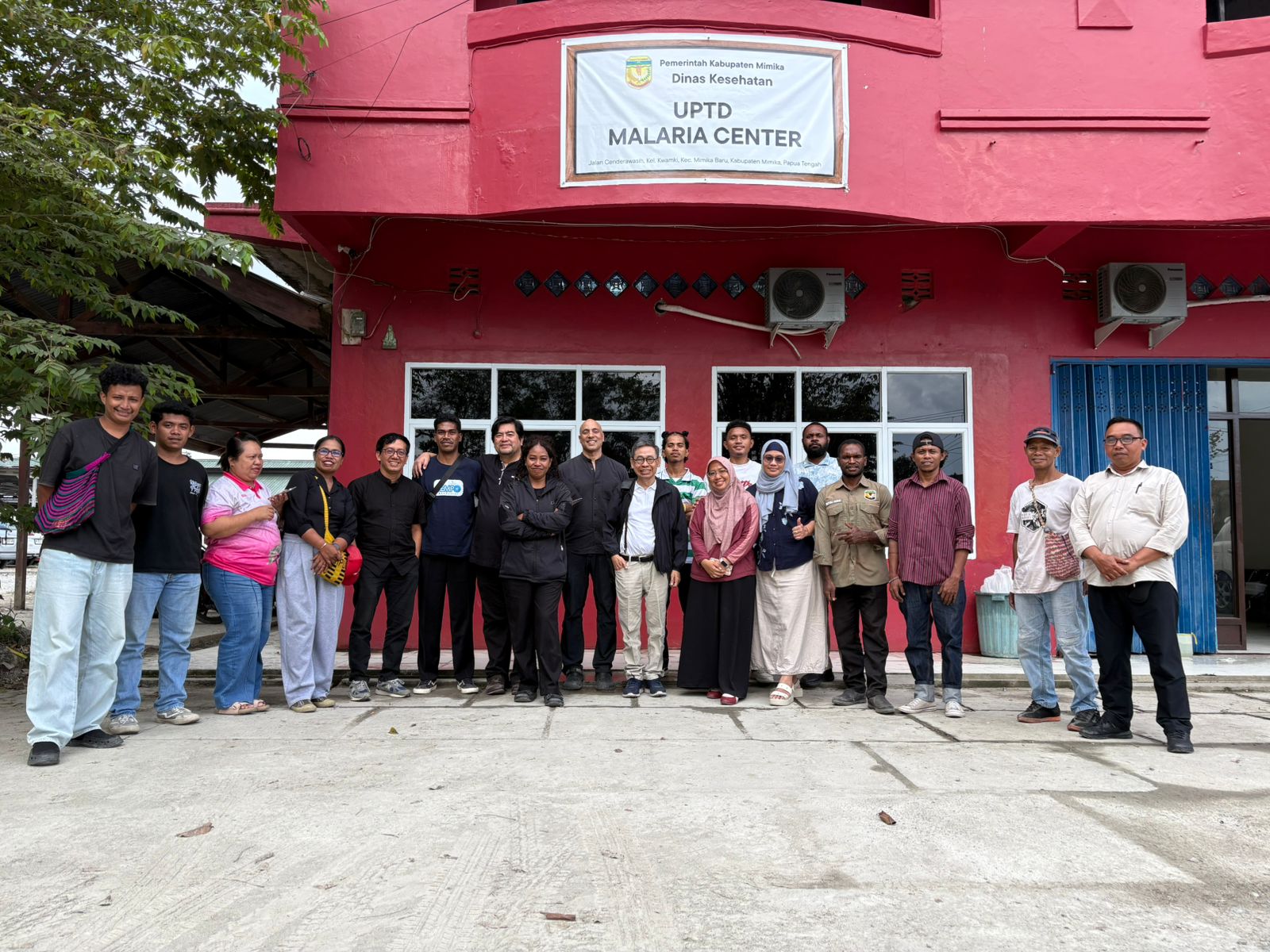
Addressing vector-borne disease challenges in Papua requires innovative, evidence-based approaches combining novel interventions, standard operating procedures (SOPs), and rigorous field execution. This initiative was conducted through a strategic collaboration between SHIELD PAPUA, the Mimika District Health Office (Dinas Kesehatan Kab. Mimika), and the Malaria Center, bringing together researchers, vector specialists, and health officers to enhance local capacity in mosquito surveillance, human behavioral observations, and spatial interventions.

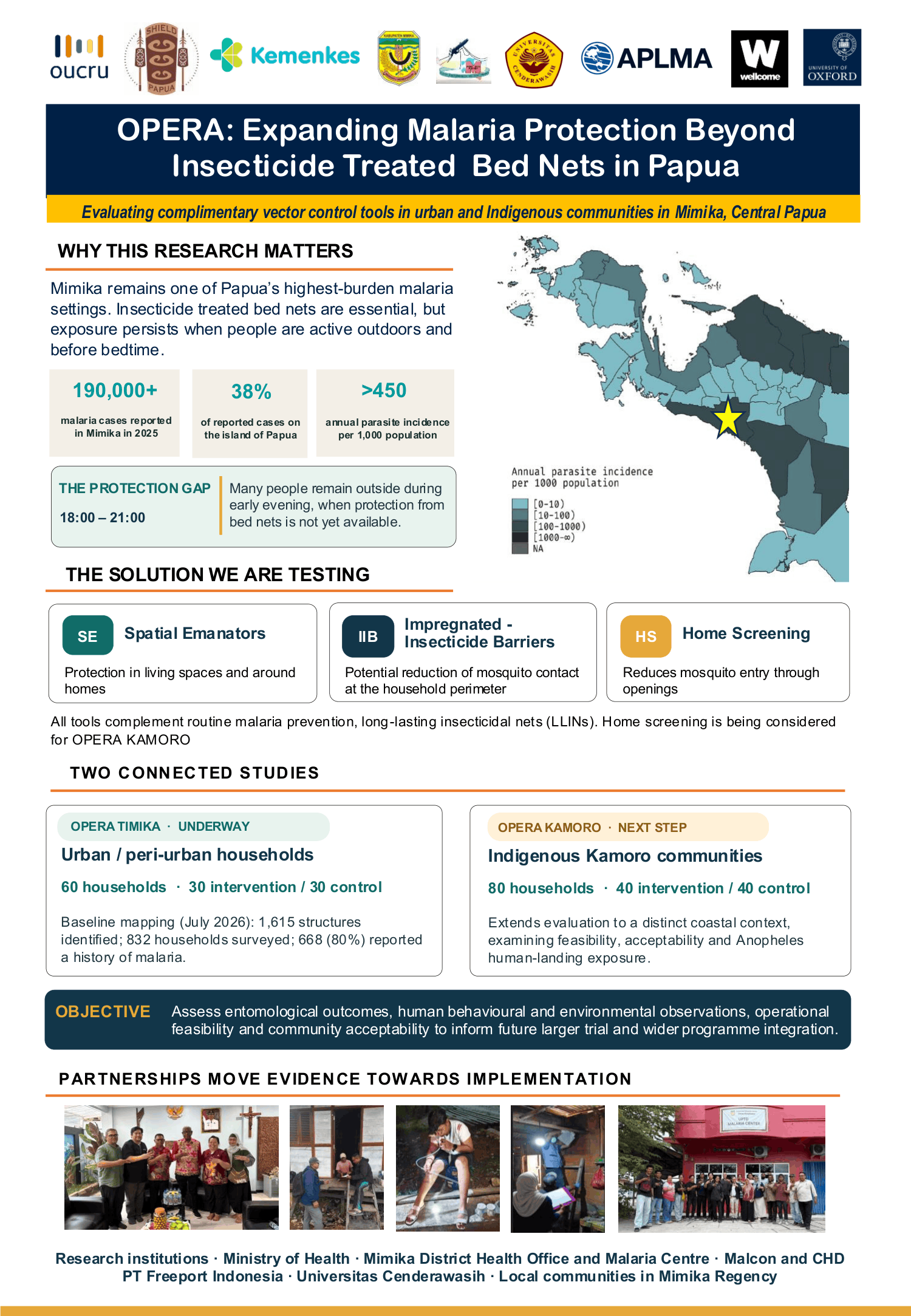
This five-day program aimed to present initial household survey findings and refine operational plans and SOPs. It introduced novel vector control strategies—specifically Spatial Emanators (SE) and Insecticide-Impregnated Barriers (IIB)—while training field staff on standardized entomological sampling procedures, including Barrier Screens, Human Landing Catches (HLC), and Human-Behavioral Observations (HBO). Practical field trials and community engagement were also conducted to ensure high-quality data collection.

The workshop and field activities took place from 25–29 August 2026 in Timika, Papua. Indoor training and operational discussions were held at Hotel Horison Ultima Timika and the Malaria Center (MALCEN), while field exercises were conducted in target study areas around Pasar Sentral and RT 014. The program involved co-investigators, vector specialists, and research staff from OUCRU Indonesia alongside local health partners.
Day 1 focused on reviewing household survey data, conducting a preliminary site visit near Pasar Sentral, and aligning research schedules and resources. Day 2 at the Malaria Center covered the scientific rationale behind SE, IIB, HLC, HBO, and Barrier Screens, concluding with an initial hands-on orientation for all team members.
Field operations intensified on Days 3 and 4. Participants practiced mosquito habitat surveys, assessed 30 intervention households, and executed the first night-time HLC and HBO sampling session in RT 014. Following an evaluation session on Day 4, the team returned to the field for a second night-time trial targeting Barrier Screen Traps. The initiative concluded on Day 5 with field sample handovers, household informed consent activities, data management, and the formulation of follow-up action plans.

By building local technical capacity and evaluating field methods, the OPERA Timika collaboration aims to ensure standardized vector surveillance and support ongoing malaria control efforts across Papua.
Tags:

Tags: