
Published on

About Us
Lorem ipsum dolor sit amet, consectetur elit, sed do eiusmod tempor incididunt ut labore et magna aliqua.
Get a free quote
Preliminary Observation to Ayuka and Tipuka Villages
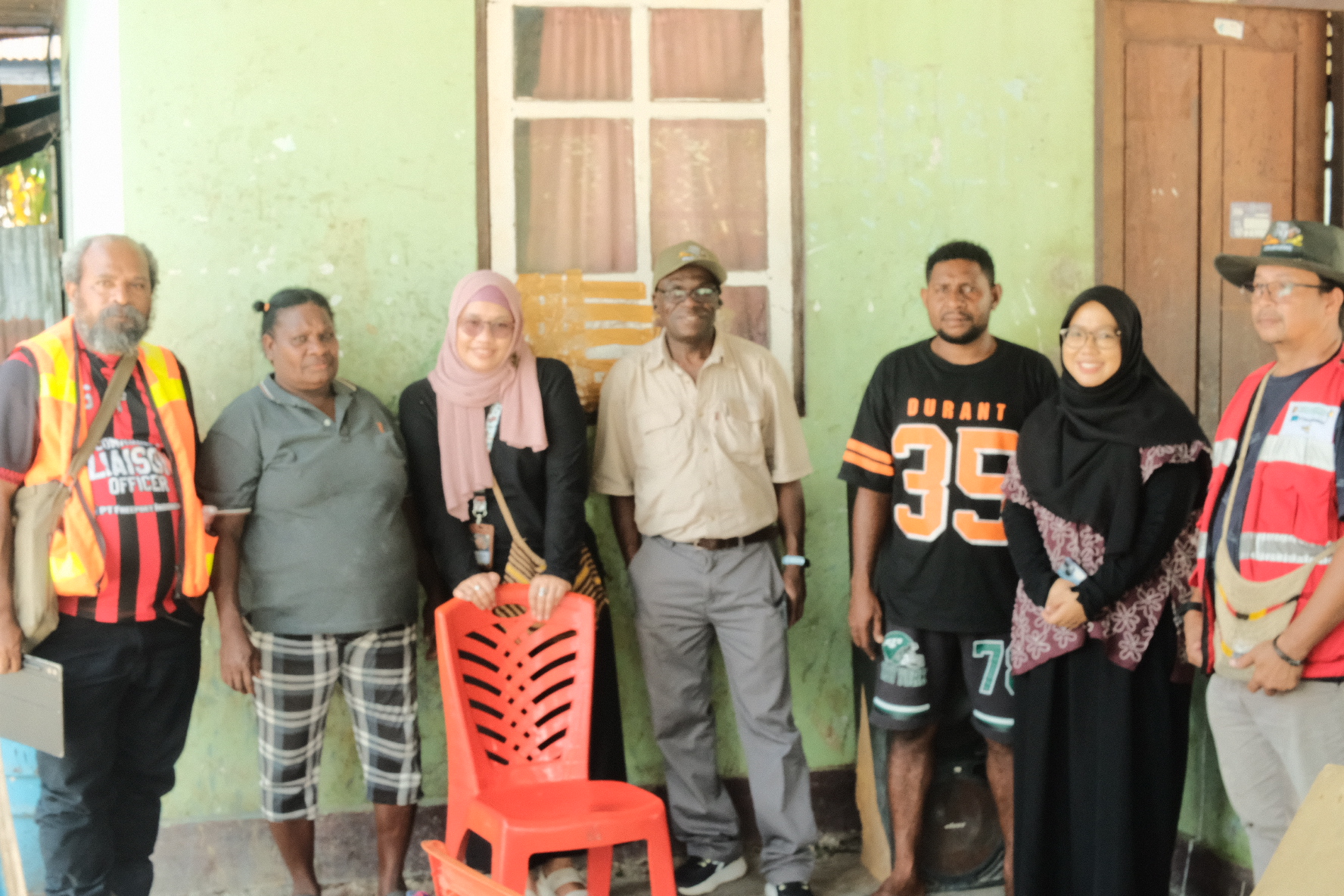
On October 23, 2025, the SHIELD PAPUA Team (represented by Lenny L. Ekawati, D.Phil., Aria A. Satwiko M.Si., and I Nyoman Indra Kresna WIjaya, S.Sos,), accompanied by Sitti Andrina from the V8 team and John Maseko from PHMC, conducted a field visit to Ayuka and Tipuka Villages, located in the Far Eastern Mimika District, Mimika Regency, Central Papua Province. This activity served as a preliminary observation aimed at exploring local beliefs regarding environmental management that could potentially prevent malaria transmission. Through this assessment, the team sought to understand the communities' perceptions of health and illness, their foundational knowledge about malaria and its prevention, and their day-to-day environmental practices to maintain community health.
Tipuka Village is a long, linear settlement inhabited primarily by the indigenous Kamoro people and administratively divided into five neighborhood units (RT). The village has a total population of 765 residents. Non-indigenous settlers account for only a small portion of the population, mostly working as local kiosk traders or program facilitators deployed by the Diocese. The indigenous Kamoro community in Tipuka strictly adheres to the Catholic faith, with weekly Sunday services held at the local Catholic church under the guidance of a catechist. In terms of educational facilities, Tipuka hosts a kindergarten, YPPK Elementary School, and a learning center established in collaboration with Harmoni Sinergi. To access healthcare, the community relies on the Mapurujaya Primary Health Center (Puskesmas) located along the village's main entrance road, an area that also centers the neighboring junior and senior high schools.
The vast majority of Tipuka residents earn their livelihood as fishermen, harvesting fish, crabs, and shrimp from the surrounding river networks. These river yields are utilized for daily subsistence and commercial sale at the Timika marketplace. To commute to the city center, residents rely on a bus service provided by a local company. This corporate bus service is also widely utilized by junior and senior high school students, providing vital transport across the 5-kilometer distance between the village and their schools, which would otherwise be too far to travel on foot.
Ayuka Village is situated adjacent to Tipuka Village, with its primary access road branching directly from the center of Tipuka. Historically, these two villages share a fraternal bond, and their residents belong to the same ancestral lineages. Due to its specific administrative boundary, Ayuka is incorporated under the Far Eastern Mimika District, distinct from Tipuka, meaning its educational and healthcare networks operate under a separate district governance framework.
Ayuka Village is divided into five neighborhood clusters locally referred to as taparu, housing a population of approximately 400 people, almost all of whom are ethnically Kamoro. A small number of settlers from the Toraja ethnic group and the BBM communities (Bugis, Buton, and Makassar) also reside in Ayuka, working as kiosk owners or school teachers. The village is equipped with its own elementary and junior high school facilities, teacher housing complexes, and a dedicated Puskesmas building located at the far edge of the settlement. Mirroring their neighboring kin, the Kamoro people of Ayuka practice Catholicism, gathering for routine worship at the St. Joseph Ayuka Catholic Church led by a local catechist.
Tags:

Tags: