
Published on

About Us
Lorem ipsum dolor sit amet, consectetur elit, sed do eiusmod tempor incididunt ut labore et magna aliqua.
Get a free quote
Strengthening Border Surveillance: SISMAL V.3 and Migration Surveillance Training for Health Quarantine Centres
Strengthening regional entry points is a crucial strategy for maintaining malaria elimination status and preventing the reintroduction of transmission in malaria-free areas. Given the high mobility of populations across regions and international borders, the role of Health Quarantine Centres (BKK) is vital in detecting and monitoring the movement of migrant populations to effectively break the chain of malaria transmission.
To support these efforts, a valid and integrated recording and reporting system is required from the health service unit level to the national centre. The latest version of the Malaria Surveillance Information System (SISMAL) is designed to simplify data validation and enhance the quality of migration surveillance, ensuring that every case detected at entry points or quarantine areas can be promptly addressed.
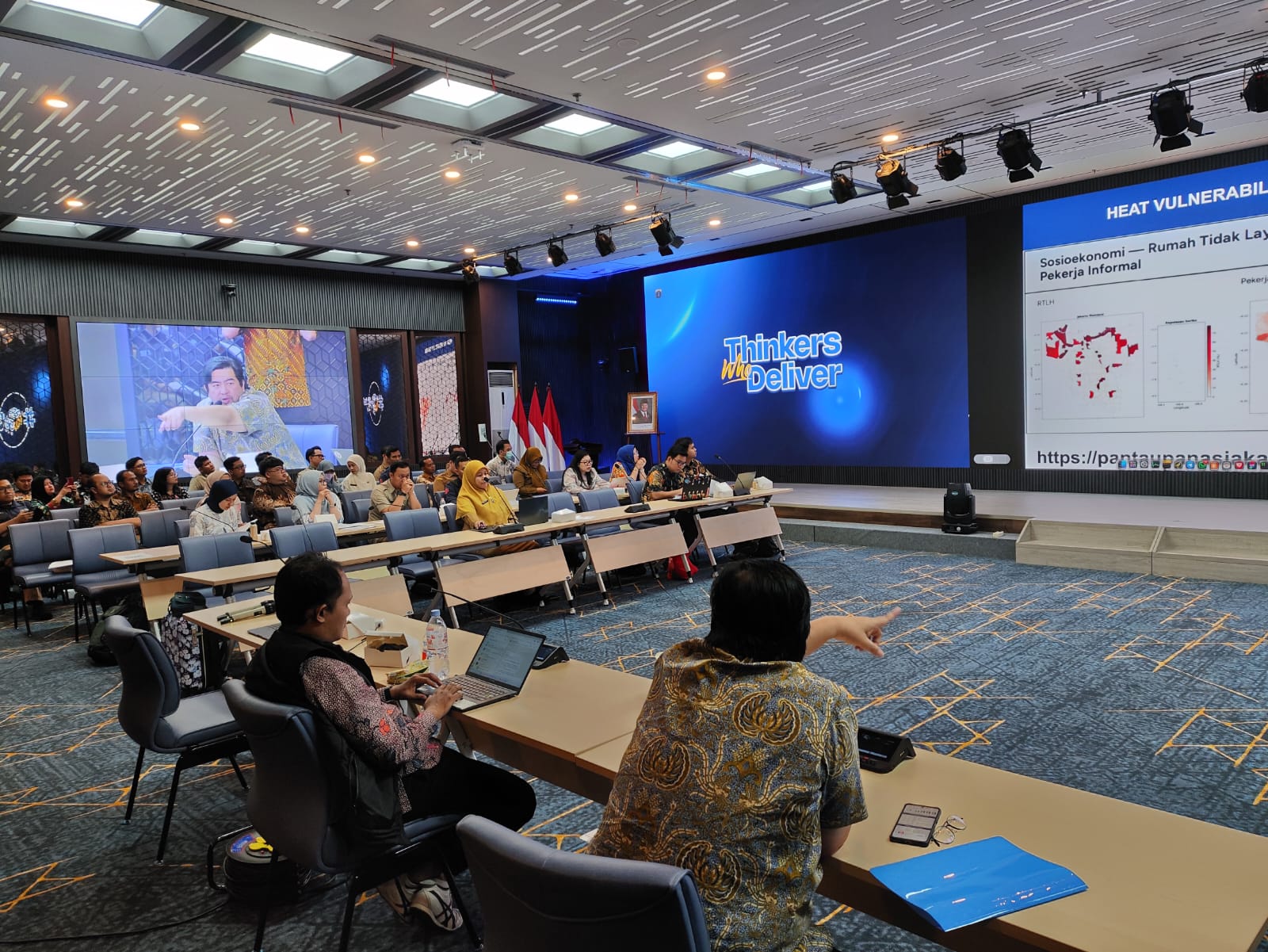
To enhance the capacity of field officers, the Directorate General of Disease Prevention and Control of the Ministry of Health organised the "On The Job Training (OJT) for SISMAL V.3 and Malaria Migration Surveillance for Health Quarantine Centres" in Batam from 2-5 December 2024. The event brought together health practitioners from various endemic and elimination regions, alongside technical experts. During the training, Iqbal Ridzi Fahdri Elyazar, DPhil attended as a malaria expert to present on population mobility dynamics and their implications for the effectiveness of malaria surveillance in Indonesia.
The training focused on the practical application of the SISMAL V.3 system, the challenges of implementing surveillance at Quarantine Centres, and sharing best practices in managing malaria migration across different regions. The synergy between information technology proficiency and a deep understanding of population mobility patterns is expected to strengthen the national early detection system.
Through this capacity building, Health Quarantine Centres are expected to serve as a robust frontline in supporting national malaria elimination targets. The collaboration between the government and experts such as Iqbal Elyazar ensures that every surveillance step taken is grounded in strong scientific understanding to achieve a Malaria-Free Indonesia.
Tags:
Tags: