
Published On

About Us
Lorem ipsum dolor sit amet, consectetur elit, sed do eiusmod tempor incididunt ut labore et magna aliqua.
Get a free quote
Building Research and Policy Capacity in Papua: Technical and Evaluation Reports on Infectious Disease Modelling Workshop
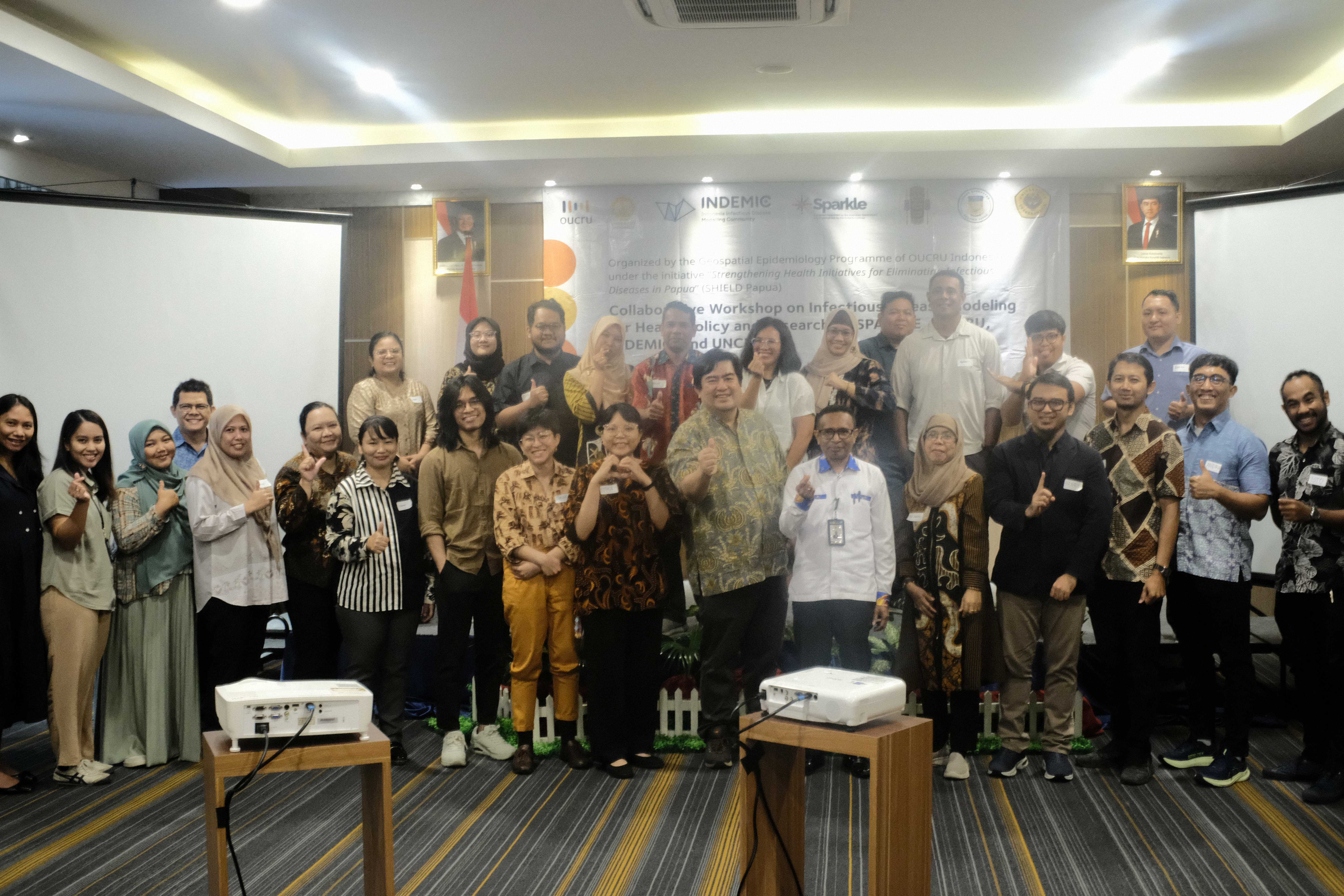
As part of the SHIELD PAPUA initiative's commitment to strengthening health systems in eastern Indonesia, the technical and evaluation reports for the "Collaborative Workshop on Infectious Disease Modelling for Health Policy and Research" have been finalised. The workshop, held in Jayapura from 13–16 October 2025, represents a strategic collaboration between SHIELD PAPUA, SPARKLE, INDEMIC, and Cenderawasih University (UNCEN).
Technical Report: Transforming Data into Decisions
The Technical Report summarises the intensive four-day journey where participants from diverse backgrounds—academics, health practitioners, and policymakers—were introduced to the fundamentals of mathematical modelling using R software. A primary focus of this report is how modelling can be utilized to synthesise health data, which is often imperfect, to provide a robust framework for testing hypotheses and evaluating the impact of various health intervention options.
Furthermore, the report documents the process of identifying research priorities developed through participatory discussions. The focus spans four key areas: HIV/AIDS, Tuberculosis, Malaria, and maternal-child health. By understanding Papua's unique risk profile, the report details the need for developing population-specific interventions that account for local behavioural and cultural factors, alongside the urgency of improving data quality by strengthening existing surveillance systems.
The report also underscores the importance of sustained collaboration between institutions in Indonesia. By establishing Cenderawasih University as the local focal point, the strategies outlined aim to create an independent research ecosystem. This includes simulating future intervention scenarios to help local governments allocate limited resources more effectively through evidence-based decision-making.
Evaluation Report: Impact and Sustainability
The Evaluation Report provides an in-depth analysis of the training's effectiveness and participant engagement profiles. Based on assessment data, there was a significant increase in participants' knowledge regarding spatial epidemiology and modelling techniques. The evaluation also addresses aspects of accessibility and inclusion, ensuring that the teaching methods were effectively absorbed by local health workers and academics who are at the forefront of infectious disease management in Papua.
Beyond learning outcomes, the report formulates strategic steps to ensure the sustainability of the built capacity. Key recommendations include plans to establish a formal research centre at Cenderawasih University through university legal frameworks, and the integration of modelling curricula into the Epidemiology postgraduate programme. The report also highlights the need for sustained mentoring mechanisms through regular communication platforms to allow alumni to continue refining their skills.
Finally, the evaluation emphasises the importance of data synchronisation with the Provincial Health Office to ensure research data integrity. Through plans to develop simplified modelling dashboards, it is hoped that research findings will become more accessible to policymakers without requiring advanced technical coding skills. These steps are essential to maintain momentum and ensure that investments in capacity building yield tangible health outcomes for the people of Papua.
These reports are prepared as internal documents to monitor programme progress and ensure accountability to development partners. Access to the full documents is restricted to relevant partners and donors only.
Tags:

Tags: