
Published on

About Us
Lorem ipsum dolor sit amet, consectetur elit, sed do eiusmod tempor incididunt ut labore et magna aliqua.
Get a free quote
Spotlight Panel: Sustaining Policy–Model Engagement in ASEAN
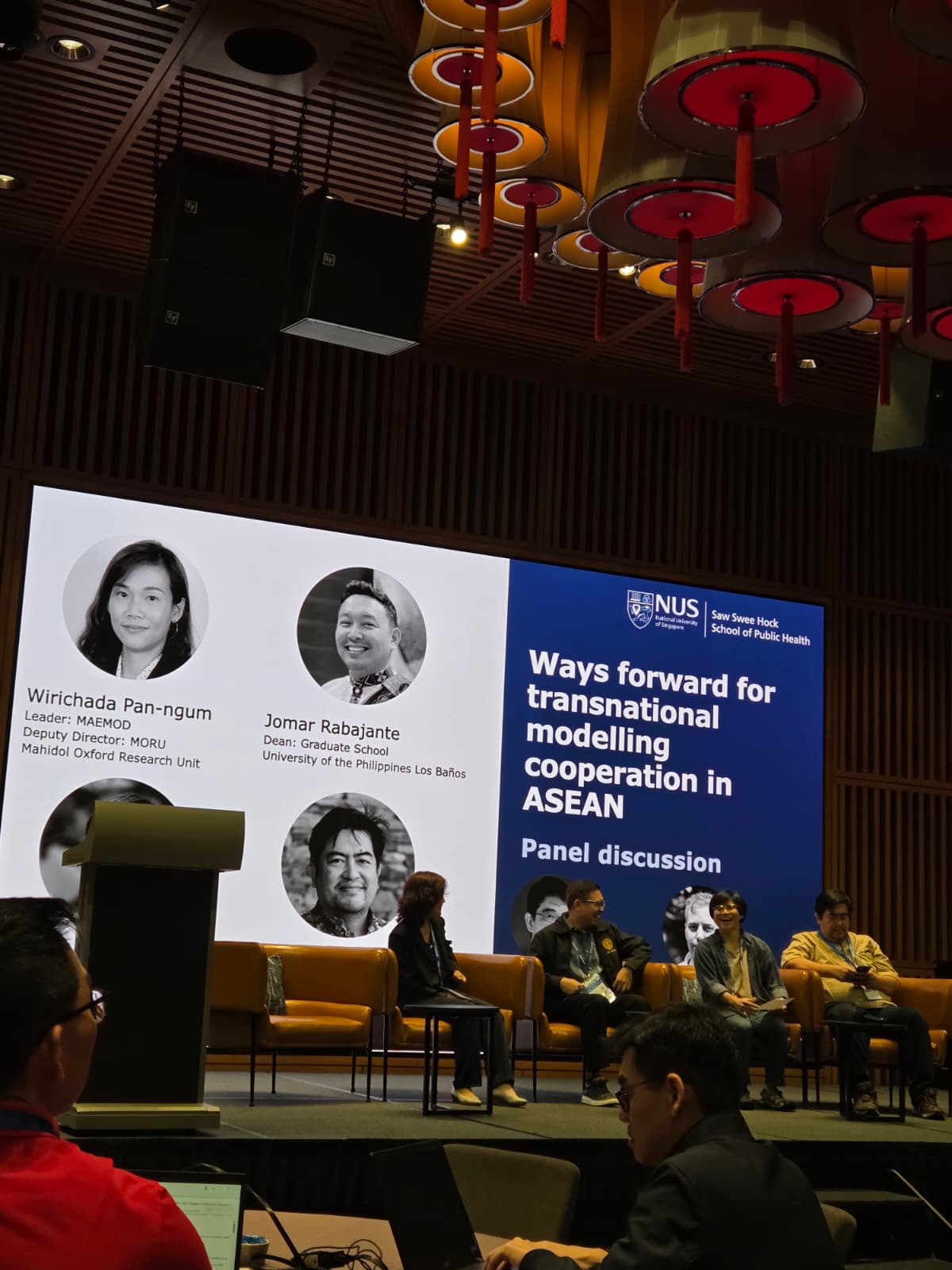
The session on Sustaining Policy–Model Engagement in ASEAN, chaired by Prof Alex Cook and Prof Kelvin Bryan Tan, brings together Dr Iqbal Elyazar, Prof Jomar Fajardo Rabajante, Dr Angkana T. Huang and Dr Wirichada Pan Ngum as panel members. The discussion provides an important space to move beyond the technical value of modelling and examine the relationships, institutions, and working practices that allow modelling to inform real policy decisions.
In ASEAN, modelling does not speak to a single policy audience. As shown in Indonesia, national, provincial, and district actors often work with different questions, datasets, timelines, and decision pressures. A model that is useful for national strategy may not answer the operational concerns of district health offices, while local data constraints may shape what can realistically be estimated.
This session therefore raises a central question: how can modeller–policymaker partnerships be sustained over time, rather than built only during emergencies or short-term projects? Experience from Indonesia suggests that policy engagement is rarely linear. Important modelling questions often emerge through repeated dialogue, not from perfectly defined requests. Data availability also strongly shapes methods, meaning that modelling for policy must be adaptive, locally grounded, and honest about uncertainty.
Policy influence may be indirect: through WhatsApp discussions, informal consultations, meeting invitations, or figures later used without clear attribution. This does not mean modelling has failed; rather, it reflects the complex and often invisible nature of policy translation.
For ASEAN, regional networks and institutions can play a crucial role by creating regular spaces for exchange, supporting shared capacity-building, and helping modellers anticipate policy needs before crises arise. However, such cooperation must avoid undermining local expertise. Sustainable engagement should be based on co-production, transparent authorship, respect for data ownership, and long-term investment in local modelling capacity.
The key lesson is simple but challenging: modellers need to keep showing up, stay beyond the deliverable, and build trust before evidence can travel into action.
Tags:

Tags: