Posted By

About Us
Lorem ipsum dolor sit amet, consectetur elit, sed do eiusmod tempor incididunt ut labore et magna aliqua.
Get a free quote
From Blood Slides to Molecular Confirmation: The Laboratory Work Behind Malaria Elimination
-

-
Published on
June 05, 2026
Malaria diagnosis often begins with a simple question: is the parasite present in the blood or not? In practice, the answer is rarely simple. A good diagnosis depends on trained eyes, good slides, careful procedures, and, at certain points, additional confirmation from molecular methods.
In 2019, a malaria PCR training was conducted as part of the broader process of producing standard malaria blood slides in Indonesia. These slides were not ordinary teaching materials. They were prepared to support the training and competency assessment of malaria microscopists, including their ability to distinguish positive and negative slides, identify Plasmodium species, and estimate parasite density.
The process brought together two forms of laboratory expertise. First, the slides were examined by ten national malaria microscopists, who provided expert readings based on microscopy. Then, conventional and real-time PCR were used to confirm the diagnosis at the molecular level. In this context, PCR was not introduced as a replacement for microscopy. Its role was more specific: to provide an additional layer of confirmation for the standard slide collection, especially when species identification was difficult, parasite density was low, or results needed to be checked carefully before being used for training and assessment.
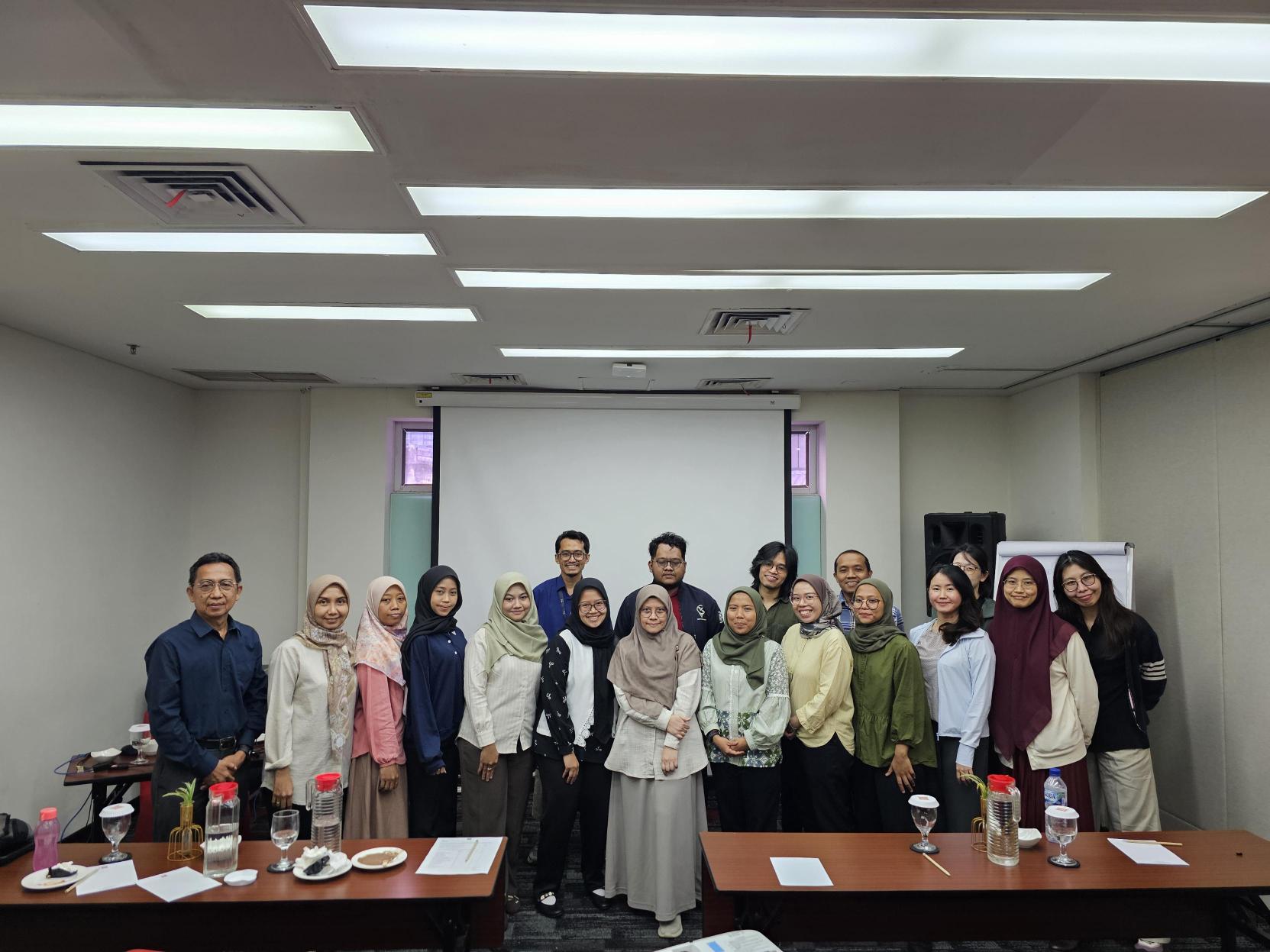
Participants came from regional laboratories across Indonesia, bringing different levels of experience from malaria diagnostic work in their own settings. Through lectures, discussion, demonstration, and hands-on practice, they learned DNA extraction, PCR mix preparation, reaction set-up, gel documentation, real-time PCR analysis, laboratory safety, quality assurance, and reporting.
The training was facilitated by Nunung Nuraini, S.Si., M.Epid., Saraswati Soebianto, S.Si., and Decy Subekti, PhD, from OUCRU Indonesia. Their role was not only to teach laboratory procedures, but also to guide participants in understanding why each step matters: how contamination happens, why documentation must be precise, and how molecular confirmation supports confidence in a slide bank used nationally.
For Papua, this history remains highly relevant. Malaria elimination depends on visible interventions, such as medicines, bed nets, surveillance, and community engagement. But it also depends on this less visible laboratory work, where reliable evidence is produced before it informs training, diagnosis, and public health decisions.
Tags:
Tags: