Posted By

About Us
Lorem ipsum dolor sit amet, consectetur elit, sed do eiusmod tempor incididunt ut labore et magna aliqua.
Get a free quote
Spatial Emanators as an Additional Layer of Protection against Malaria
-

-
Published on
August 27, 2026
Insecticide-treated nets and indoor residual spraying remain central to malaria vector control. Both have contributed substantially to reducing transmission, but their protection depends on where people are, when mosquitoes bite and how houses are constructed.
Bed nets mainly protect people while they are sleeping. Indoor residual spraying targets mosquitoes that rest on treated walls. However, exposure may also occur before people go to bed, while they spend time on verandas or in yards, during evening work, or inside open and poorly screened structures. Some malaria vectors bite outdoors or enter houses without resting on treated surfaces. These circumstances may leave gaps in protection even where conventional interventions are widely available.
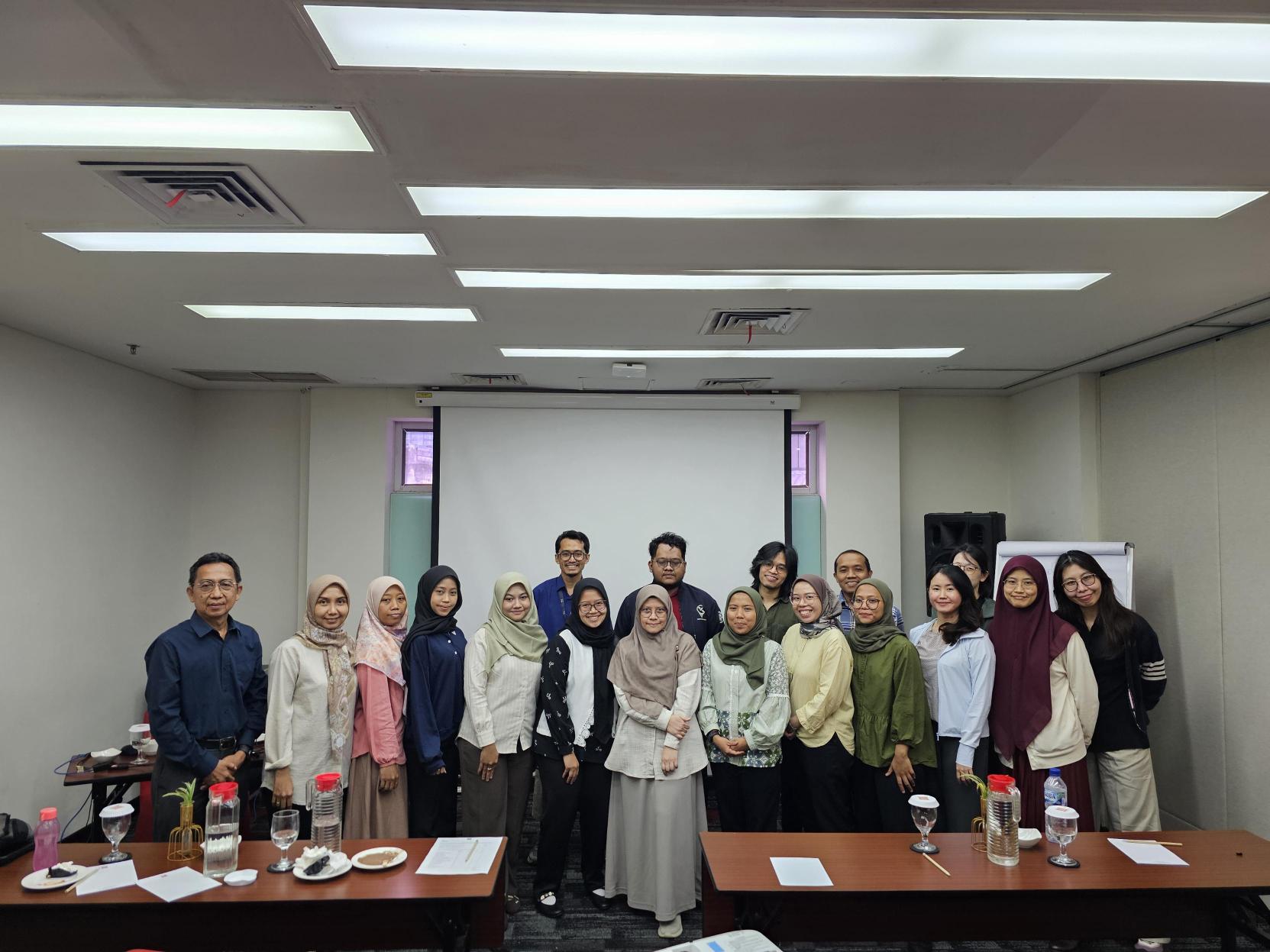
These protection gaps were discussed during a training session on spatial emanators held on 26 August 2026 as part of OPERA TIMIKA. The trainers were Professor Neil F. Lobo, Research Professor at the University of Notre Dame, and Professor Din Syafruddin, Professor of Parasitology at the Faculty of Medicine, Hasanuddin University. The training covered how spatial emanators work, evidence supporting their use, correct installation and the importance of evaluating them under local conditions in Indonesia.
What are spatial emanators
Spatial emanators, also known as spatial repellents, are products that release a volatile active ingredient into the surrounding air. Rather than being applied directly to the skin, they create a treated space in which mosquito behaviour and survival may be affected.
Depending on the product, active ingredient and concentration, spatial emanators may deter mosquitoes from entering a treated area, interfere with their ability to locate people, inhibit feeding, disorient or incapacitate them, or cause mortality. Passive emanators do not require electricity or repeated action by the user. They must, however, be installed correctly and replaced at the required intervals.
Their potential value lies in providing protection when people are not under bed nets, particularly in houses or semi-open domestic spaces where existing indoor interventions may provide incomplete coverage.
Correct installation is essential
The training emphasised that spatial emanators will not provide their intended protection simply because they are present in a household. Their performance depends on three connected factors: correct placement, the appropriate number and density of devices, and timely replacement.
Installation should begin by identifying the treatment space. Field staff need to understand where household members spend their time and where mosquitoes are most likely to bite. This assessment determines which rooms or domestic spaces should be protected.
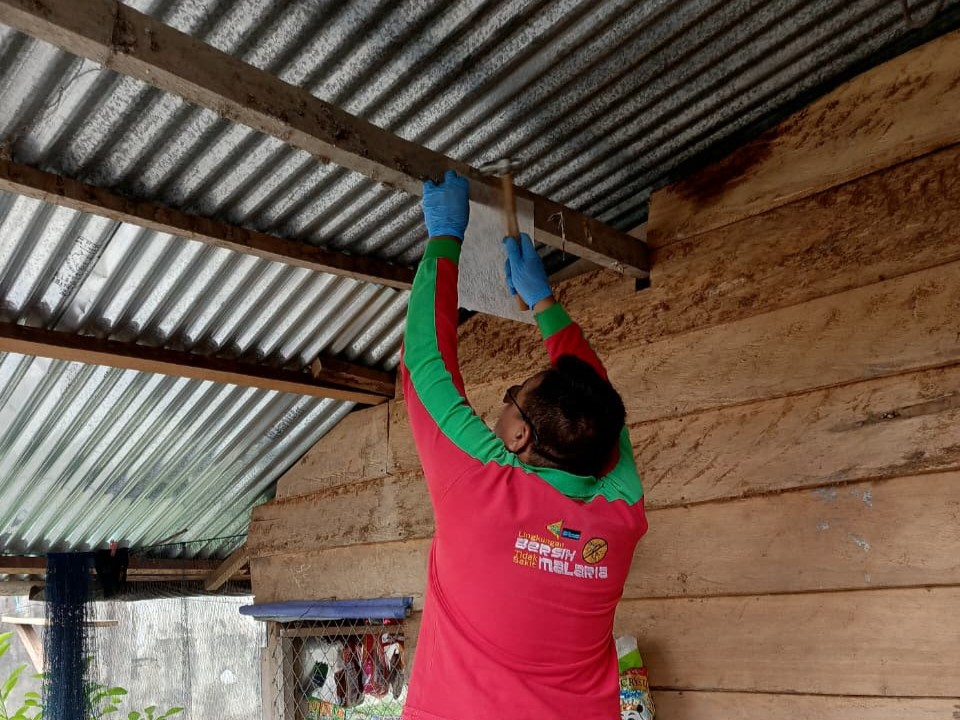
The devices should be placed close to the area used by household members, but must remain visible and unobstructed. They require normal air circulation so that the active ingredient can disperse through the treated space. At the same time, they should be protected from rain and positioned away from smoke, strong draughts and activities that might damage or disturb them. For the BiteBarrier product demonstrated during the training, the sheets were hung at a height of approximately two metres using a nail, hanger or wire. Bedrooms and living rooms were among the principal indoor locations considered for installation.
Clothing, curtains, furniture and other objects should not cover the device. Covering it may restrict the movement of the active ingredient through the air and reduce the area protected.
Determining the number of devices
One device does not necessarily provide sufficient protection for an entire house. The number required depends on the volume and design of the room, air movement, the area to be protected and the specifications of the product.
For the BiteBarrier product presented during the training, one product consisted of two sheets intended to cover approximately 30 cubic metres. A small room of about 15 cubic metres could use one sheet, or half a product. A room larger than 30 cubic metres and up to approximately 60 cubic metres would require two products, or four sheets.
Room volume can be estimated by multiplying the length, width and effective height of the space. For example, a room measuring three metres by four metres with an effective height of two metres has a volume of 24 cubic metres.
These quantities and the four-month replacement schedule presented during the training are specific to the demonstrated product and study protocol. Other spatial emanators may contain different active ingredients, release the chemical at different rates or cover a different volume. Installation teams must therefore follow the manufacturer’s instructions and the approved study protocol for the product being used.
Household and community coverage
Protection also depends on the overall density of spatial emanators within the intervention area. Correct installation in one room does not necessarily protect every part of the house, and protection in a small number of houses may not produce a measurable community effect.
The training used an illustrative scenario in which approximately 80% coverage was needed to explain how sufficiently high coverage might reduce mosquito activity across a community. This figure should not be interpreted as a universal threshold. The coverage required in practice will depend on the product, local vector behaviour, housing density, environmental conditions and the intended outcome.
Household education and monitoring
Installation should follow a clear sequence. The household is first visited and mapped. Field staff then explain the intervention before installing the correct number of devices and agreeing on a monitoring schedule with the household.
Families should receive clear information about what the device is and how it works, what protection it may provide, what it cannot do, where and why it has been installed, how it should be handled, relevant safety information, and when it must be replaced.
Follow-up is needed to confirm that every device remains installed, intact, correctly positioned and replaced on time. Common implementation problems include devices being moved between rooms, taken indoors or outdoors, damaged, lost or covered by clothing.
Supervisors should verify the placement and number of devices, confirm the household or installation coordinates, and ensure that monitoring forms have been completed. Implementation success therefore depends on high coverage, continued household participation and correct placement, rather than distribution alone.
A new WHO recommendation
On 13 August 2025, the World Health Organization issued a conditional recommendation supporting the use of spatial emanators indoors, in addition to insecticide-treated nets, for children and adults living in areas with ongoing malaria transmission. WHO described spatial emanators as the first new class of malaria vector-control intervention recommended in decades.
The recommendation was based on moderate-certainty evidence from five studies assessing passive emanators and mosquito coils. WHO also prequalified two products containing transfluthrin, an active ingredient that can repel, disorient and kill malaria mosquitoes.
The scope of the recommendation is important. Spatial emanators are intended to complement insecticide-treated nets rather than replace them. Evidence remains limited regarding their effectiveness when used alone, their epidemiological effect outdoors and their role in managing insecticide resistance. World Health Organization, 2025
Evidence from outdoor and semi-open settings
Field studies suggest that spatial emanators may reduce contact between people and mosquitoes in open or semi-open spaces. Most of this evidence, however, concerns mosquito landing or host-seeking activity rather than malaria infection in humans.
Among Indigenous Orang Rimba communities living near forests in Sumatra, nightly Anopheles host-seeking activity was approximately 71% lower around households receiving spatial emanators than around households receiving control devices. The effect remained evident throughout the four-week replacement period.
The study measured mosquito activity rather than malaria infection. The reduction in host-seeking activity should therefore not be interpreted as evidence of an equivalent reduction in malaria cases. Burton and colleagues, Malaria Journal, 2025
A field study in Cambodia assessed a volatile pyrethroid spatial repellent in temporary open shelters used by forest-exposed populations. Under the study conditions, the spatial repellent prevented an estimated 94% of Anopheles landings. Although the findings indicate substantial protection against mosquito landing, further evidence is needed to determine its effect on malaria transmission during routine use. Scientific Reports, 2024
In southern Zambia, spatial emanators installed in open-walled outdoor kitchens reduced Anopheles host-seeking activity by approximately 65–70%. Their effectiveness declined as the products aged, reaching an estimated 20–25% after four weeks. The study also found no statistically significant protection during the early evening, between 18:00 and 21:00.
These findings show why product lifespan, placement, local mosquito behaviour, air movement and the timing of human activities must be considered before findings from one setting are applied elsewhere. Burton and colleagues, PLOS ONE, 2025
Why evidence from Papua is needed
The performance of spatial emanators cannot be assumed to be the same in every community. Mosquito species, biting times, temperature, humidity, wind, house construction and the ways people use indoor and outdoor spaces may all influence their effectiveness.
These differences are particularly relevant in Papua. Many people spend time outdoors or in semi-open domestic spaces during the early evening. Houses vary considerably in their construction, ventilation, screening and proximity to mosquito breeding sites. Malaria vectors may also bite both indoors and outdoors. A product that performs well in a closed house may work differently in a coastal settlement, an open kitchen or a densely populated urban neighbourhood.
Local research must therefore examine more than whether a product reduces mosquito landings. It should assess whether households understand and accept the intervention, whether the correct number of devices remains properly installed, and whether participants experience discomfort, safety concerns or practical difficulties.
Learning through OPERA TIMIKA
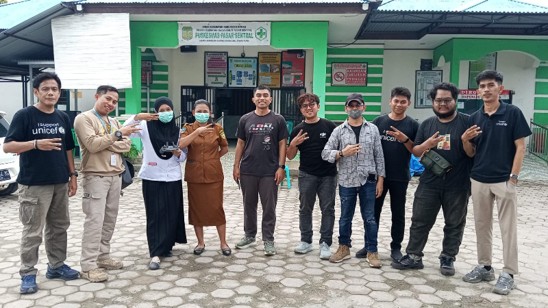
OPERA TIMIKA is contributing to this evidence by assessing the feasibility, acceptability and performance of spatial emanators under local conditions in Mimika. The study considers how the intervention functions within actual houses and everyday routines, alongside entomological monitoring, malaria testing and engagement with participating communities.
Monitoring covers whether the products remain installed and intact, whether their placement continues to allow adequate air circulation, and whether households move, cover or remove them. The study also documents household experiences so that technical performance can be interpreted alongside acceptability and practical use.
The findings can help identify where spatial emanators provide additional protection, how they should be installed and maintained, and how they might be integrated with insecticide-treated nets, house screening, insecticide-treated barriers and other malaria-control measures.
Part of integrated vector management
Spatial emanators offer a promising additional tool for malaria prevention, particularly where mosquito behaviour and human activities leave people exposed outside the protection provided by bed nets and indoor residual spraying. Current evidence does not support treating them as a stand-alone intervention.
Their future contribution will depend on correct installation, adequate coverage, timely replacement, continued household participation and integration with established malaria interventions. Studies such as OPERA TIMIKA are important for determining whether spatial emanators can close specific protection gaps and contribute safely and effectively to malaria elimination in Papua.
Tags:



Tags: